Under Construction
Head of Department's Message
The Department of Nursing at Wollega University is playing a vital role in strengthening Ethiopia’s healthcare system by training competent, ethical, and compassionate nursing professionals. As essential pillars of healthcare delivery, nurses are crucial in promoting health, preventing disease, and providing critical care at all levels of the health system.
Although progress has been made, research indicates that the density of nurses in Ethiopia remains around 0.7 per 1,000 people—well below the World Health Organization's recommended minimum of 4.45 per 1,000 to achieve Universal Health Coverage. This indicate that Ethiopia continues to face significant challenges include a shortage of qualified nursing staff, high patient-to-nurse ratios, limited access to professional development opportunities, and a lack of integration of evidence-based practices.
Our department strives to solve the problems relevant to our field. To achieve our vision, I would like to invite different stakeholders, governmental and non-governmental organizations to collaborate with us.
With my best regards,
Program Admission Requirement (Eligibility)
- Applicants must:
- Have a natural science background
- Meet the Ministry of Education criteria for entry into degree-level programs.
- Be physically fit, capable of undertaking essential clinical diagnostic techniques (inspection, palpation, percussion, auscultation), and free from hearing impairments.
Preferably, those who choose to enter the profession.
Vision
- To produce knowledgeable and compassionate professional nurses who deliver the highest quality of patient care, truly making a meaningful difference in patients’ lives.
Mission
- To develop competent and innovative nurses across diverse specialties through practical, lifelong learning; to engage in research, technology transfer, and community service; and to uphold good governance in support of sustainable development.
- To produce competent, compassionate, innovative, and ethically grounded nurses equipped with a comprehensive blend of knowledge, clinical skills, and professional attitudes, capable of delivering high-quality, evidence-based care, addressing the diverse health needs of individuals and communities, and fulfilling their vital roles within the broader healthcare system and society.
Objectives of Comprehensive Nursing Program
Prepare competent and motivated Comprehensive nurses who are able to:
- Provide high-quality comprehensive nursing care ethically and professionally.
- Manage common communicable and non-communicable diseases.
- Manage common MCH, RH, emergency, and mental health problems
- Promote and prevent disease.
- Engage in teaching, learning, research, and community outreach activities
- Lead and manage nursing care services.
The Department of Comprehensive Nursing was initially established in 2000 E.C. as part of the College of Health Sciences, Wollega University. In 2002 E.C., the launch of the Midwifery program marked a significant milestone, leading to the department being renamed the Department of Nursing and Midwifery. Over the years, the department experienced substantial growth, adding several specialized programs including Pediatrics and Neonatal Nursing, Surgical and Operating Theatre Nursing, Emergency and Critical Care Nursing (ECCN), as well as Psychiatry and Ophthalmic Nursing. In 2009 E.C., this expansion culminated in the transformation of the department into the School of Nursing and Midwifery under the College of Health Sciences at Wollega University. The school now comprises six distinct academic departments:
- Comprehensive Nursing
- Midwifery
- Pediatrics and Neonatal Nursing
- Emergency and Critical Care Nursing
- Psychiatry Nursing
- Surgical Nursing
Currently, the department Comprehensive Nursing offers a range of academic programs, including:
- One undergraduate program:
- BSc in Comprehensive Nursing
- BSc in Comprehensive Nursing (Post basic)
- Two postgraduate programs:
- MSc in Maternal and Reproductive Health Nursing (MRHN)
- MSc in Adult Health Nursing (AHN)
- The department is staffed by a committed and diverse faculty, which includes:
- 1 PhD holder
- 5 Assistant Professors
- 15 Lecturers
- 4 Technical Assistants
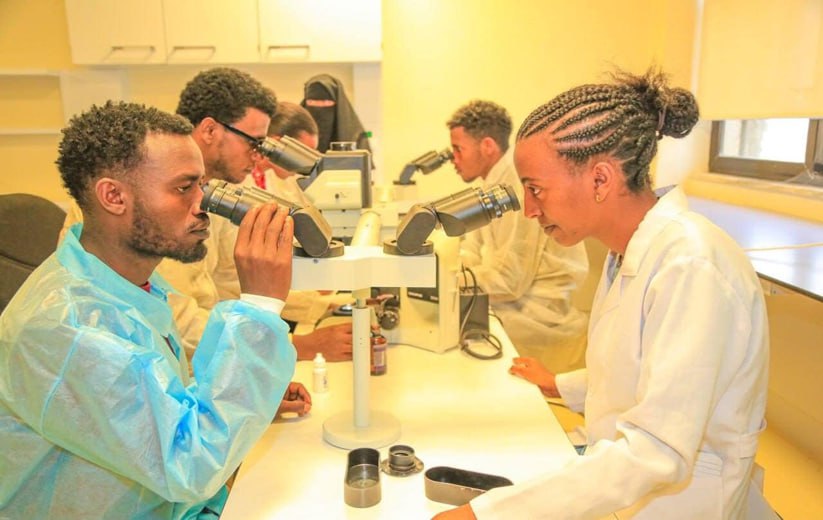
- To support practical training and clinical skills development, the department operates two smart skill demonstration laboratories equipped with high- and low-fidelity simulators, ensuring that students receive hands-on, simulation-based education in a controlled learning environment.
DEPARTMENT OF Comprehensive Nursing
የአጠቃላይ ነርሲንግ ት/ ክፍል
Overview
- The Department of Comprehensive Nursing was initially established in 2000 E.C. as part of the College of Health Sciences, Wollega University. The goal of this department is to provide quality nursing education with theory and practice. Students learn by means of theory classes in the classroom, practice in the hospital and community, and firsthand participation in outreach. This will make our graduates not only effective caregivers but leaders who can solve the emerging challenges in healthcare.
- The Department of Nursing is committed to graduating graduates who deliver effective and safe care, enhance patients' well-being, and uphold the values of compassion and honesty. Our vision is to develop nurses that instill trust, promote health, and contribute to a more robust and healthier society.
Leadership History
- Tesfaye Regasa (10/01/2000-29/12/2001 E.C, the first department head
- Tahir Hasan (19/01/2002-03/06/005 E.C),
- Dareje Chala (05/7/ 2005-30/02/2008E.C)
- Biranu Yadecha (05/03/2008-15/10/2009E.C)
- Ashenaf Habte (17/11/2009- 08/02/2011 E.C)
- Tadele Amante (11/02/2011-20/05/2012 E.C)
- Muktar AbbaDigga (10/4/2011-07/07/2013 E.C)
- Tesfaye Abera ( 10/07/2013-28/09/2014 E.C)
- Adugna Olani (25/9/2014-15/08/2015 E.C)
- Dawit Tesfaye (20/09/2015-2016 E.C)
- Aliy Benti (16/7/2016-13/01/2017 E.C)
- Chaltu Shimelis (14/01/2017 till now) is currently leading the department
Head of Department's Message
Ladies and gentlemen:
I am very much delighted and privileged to write this address note to all our well-wishers and
health professionals. We all know that health is the most precious wealth that all humans could
have in their life. Moreover, a person can’t feel complete and happy in their life without having a
good health. Also, nobody could gain a good health by any sort of financial negotiations. That’s why the interventions to meet this health care demands need to me more aggressive.
In Africa the biggest challenge in the health care system is the shortage of trained health care professionals and their proper distribution in all sectors. Our country is also not different from this.
The average prevalence of mental disorders in Ethiopia is 15% for adults and 11% for children. Currently, there are about 111 psychiatrists for a population of more than 100 million and most of them are working in Addis Ababa city. This gives a psychiatrist-to-population ratio of 1:2,400,000. Compared to other Sub-Saharan Africa counties, Ethiopia has low number of psychiatrists per population. The factors that cause burden on mental health needs to be addressed effectively. Our institution strives to solve the problems in the community relevant to our field of specialization. To achieve our vision, I would like to invite different stakeholders, governmental and non-governmental organizations to collaborate with us. Looking forward for the cooperation and support from all our well-wishers. Thank you.
Program Rational
Psychiatry nursing department trains psychiatry professionals to meet the high level of need that currently exists in Ethiopia. Ethiopia has been suffering from a wide range of mental health problems. Ethiopia facing the triple burden of diseases such as infectious or communicable, noncommunicable and injuries. Moreover, the effects of financial instability, lifestyle changes, social isolation, natural disasters, wars, and rapid urban growth and overcrowding all together increases the prevalence of mental disorders resulted in an increased demand for mental health care.
In response to the public’s high demand for mental health care, the government of Ethiopia highly committed to expand mental health service and fulfil the shortage of mental health professionals throughout the country. Mental health is categorized as one of public health importance diseases and one of component of primary health care (PHC). Ethiopia identified it as one of the priorities in its policies and strategies.
The proportion of highly qualified mental health professionals is very low compared to the size of the population served. This situation requires the increased training of appropriately trained psychiatrist some key issues remain: training of psychiatrist takes a long period of time and is too expensive. This situation requires training of psychiatry graduate (BSc Level) in adequate number. Therefore, training of BSc in psychiatry is found more feasible and cost effective in solving common mental health problems of the population in Ethiopia.
Program Admission Requirement (Eligibility)
- Candidates must be a natural science (biology, chemistry, general sciences) student and fulfill the following criteria;
- Meet the set criteria by the Ministry of Education for degree students to join higher learning institution.
- Be physically fit (at least the candidate should be physically healthy capable of undertaking the four techniques of diagnosis of disease in clinical medicine i.e inspection, palpation, percussion and auscultation) and not having hearing problem.
- Female candidates will be encouraged
- Preferably, those who have interest to choose the profession.
Vision, Mission and Objectives of the Program
Vision
- The vision of our program is to produce knowledgeable and compassionate professional Psychiatric and who will provide the highest quality of patient care that truly makes a difference in patients’ lives.
Mission
- To produce competent and innovative psychiatry nurses in various disciplines through practical, lifelong learning; engaging in research, technology transfer and community services and promote good governance to the development endeavors.
- To produce competent, compassionate, innovative and committed psychiatry nurses who undertake preventive, curative and rehabilitative mental health services compatible to the needs of the population and that would meet the present and future priority mental health needs of the Ethiopian population and fulfil international professional standards.
Objectives of Psychiatry Nursing Program
Prepare competent and motivated psychiatry nurse who are able to:
- Apply legal and professional ethics
- Communicate, collaborate and work with people
- Apply health informatics and emerging technologies in mental health services
- Promote mental health and prevent mental illness
- Provide mental health rehabilitation service
- Provide mental health curative service
- Participate in community mental health service
- Participate in teaching-learning and research activities and community activities
- Lead and manage health service