Open menu

About the Department of Emergency and Critical Care Nursing

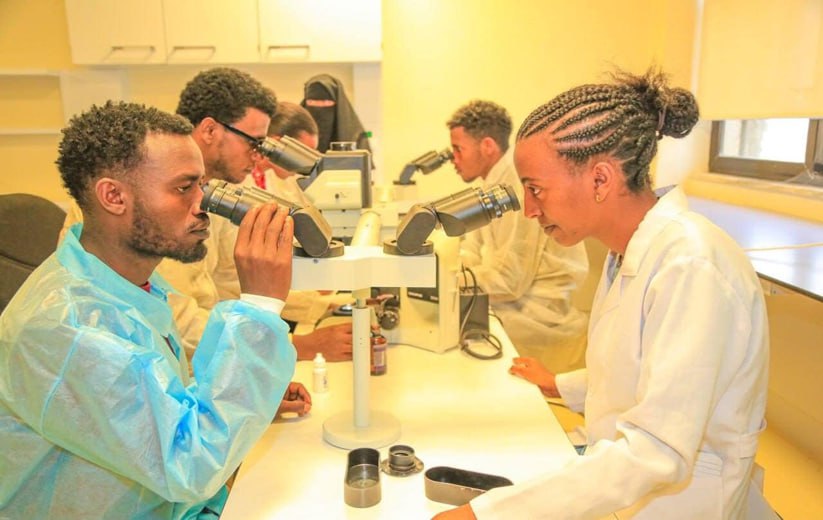
The Department of Emergency and Critical Care Nursing at Wallaga University, Institute of Health Sciences, School of Nursing and Midwifery, has been establishment in 2010 E.C. The department was founded in alignment with the vision and mission of Wallaga University. Emergency and Critical care nursing is a Nursing specialty within nursing that deals specifically with human responses to life-threatening problems. Emergency and critical care nurse is a licensed professional nurse who is responsible for ensuring that acutely and critically ill patients and their families receive optimal care. Emergency and Critical care nurses can be found working in a wide variety of environments and specialties, such as emergency departments and the intensive care units. 

Academic Programs

The department offers a comprehensive suite of programs that cater to different levels of professional development:

  1. Post-Basic in Emergency and Critical Care Nursing
  2. Bachelor of Science (BSc) in Emergency and Critical Care Nursing (Generic)

Program Duration

  • Post-Basic Programs: Two and a half years
  • Undergraduate Generic BSc Program: Four years

Achievements

From its foundation, the department has successfully graduated five cohorts of post-basic students. The generic undergraduate program is currently in its second year of training, with growing enrollment and demand.

Through these programs, the department continues to fulfill its mission of producing competent, compassionate, and innovative Emergency and Critical care nurses.

DEPARTMENT OF EMERGENCY AND CRITICAL CARE NURSING                                                                          

         ድንገተኛና ጽኑ ሕሙማን እንክብካቤ ትምህርት ክፍል                                                                                                                                             

Overview

  • The Department of Emergency and Critical Care Nursing was established in 2010 E.C as a unit under the Institute of Health Sciences, School of Nursing and Midwifery at Wallaga University. Since its establishment, the department has been dedicated to addressing the critical shortage of professionals in Emergency and Critical Care health services by producing competent nurses who can provide preventive, curative, and rehabilitative care to critically ill patients.
  • Initially, the department launched two-and-a-half-year post-basic training programs in Emergency and Critical Care Nursing. This initiative was designed to respond to the urgent demand for specialized Emergency and Critical Care Nursing professionals across the country. Including the post-basic training programs, the department started training BSc in Emergency and Critical Care Nursing undergraduates, thereby addressing gaps in the middle level of Emergency and critical care nursing health professionals.
  • The department has maintained its commitment to Wallaga University’s vision and mission by producing highly skilled and compassionate nurses capable of serving diverse communities in Ethiopia. Training of these specialty nurses has proven to be both feasible and effective in reducing preventable emergency and critically ill patients and mortality.


Leadership History: Mr. Nesru Hiko from 2010 E.C till now acting as department head.

Vision, Mission, and Objectives of the department

Vision

☞ The vision of our program is to produce compassionate, skilled, and resilient healthcare providers who are dedicated to saving lives, improving outcomes, and providing high-quality care in high-stress, fast-paced environments. 

Mission

☞ To produce competent emergency & critical care nursing professionals who are able to provide a wide range of emergency and critical care for patients with life-threatening illnesses and injuries.

Aim of the Program

☞ To produce competent, compassionate, innovative, and committed emergency & critical care nurses who undertake preventive, curative, and rehabilitative health services tailored to the needs of Ethiopia’s population, while meeting both present and future national priorities and international professional standards.

Objectives of the department

  • Prepare emergency & critical care nurses equipped with solid knowledge of biomedical science, clinical and public health practice
  • Prepare emergency and critical care nursing students in providing individualized patient care using the nursing processes.
  • Equip emergency and critical care nursing students on the management of patients with multiple organ failure using the existing scientific knowledge
  • Equip emergency and critical care nursing students on the establishment and strengthening of emergency medical services system
  • enable emergency and critical care nursing students practice in a professional manner on all level of emergency and critical care setting
  • Train emergency and critical care nursing in developing professional communication skill in dealing with patients’ family and other health professionals
  • Prepare the emergency and critical care nursing students participate in conducting and utilizing relevant research findings
  • Train emergency and critical care nursing students to apply evidence-based nursing practice for patients
  • Train the emergency and critical care nursing in practical skills based on theoretical foundation
  • Equip the students with leadership and management skills
  • Equip students with critical thinking and decision-making skills which lead to reflective and responsible practice

Program Admission Requirement (Eligibility)

  • Applicants must:
    • Have a natural science background
    • Meet the Ministry of Education criteria for entry into degree-level programs.
    • Be physically fit, capable of undertaking essential clinical diagnostic techniques (inspection, palpation, percussion, auscultation), and free from hearing impairments.
    • Female candidates are strongly encouraged to apply.

Message from the Director

Dear Esteemed Colleagues and Partners,

Tesfaye AberaIt is my great pleasure to present the official profile of the School of Nursing and Midwifery under the Institute of Health Sciences, Wallaga University. Our school has made remarkable progress in advancing academic excellence, professional competence, and community service through quality education, research, and healthcare service delivery.


We remain committed to producing competent and compassionate nurses and midwives who contribute meaningfully to the health system of Ethiopia and beyond. I extend my sincere appreciation to our academic, clinical, and administrative staff for their dedication, and to the University administration for its continued support.
With best regards,

Mr. Tesfaye Abera Gudeta (MSc, Assistant Professor)

Director, Nursing and Midwifery Academic and Service Directorate
Wallaga University

1. Introduction

The School of Nursing and Midwifery was established in 2007 under the Faculty of Health Sciences and later reorganized as a School under the Institute of Health Sciences, Wallaga University. Since its inception, the School has expanded its programs, improved teaching and learning facilities, and strengthened its contribution to the regional and national health sector.
Currently, the School offers twelve academic programs: eight undergraduate and four postgraduate programs and provides essential teaching learning, research, community service and clinical services in Wallaga University Comprehensive Specialized Hospital. The School plays a key role in training competent nurses and midwives who serve in hospitals, health centers, and community settings across Ethiopia.

2. Vision, Mission, and Core Values

Vision:

To be a center of excellence in nursing and midwifery education, research, and service at national and international levels.

Mission:

To produce competent, ethical, and compassionate nursing and midwifery professionals through high-quality education, evidence-based practice, and community engagement.

Core Values:

Academic excellence, professionalism, teamwork, ethical conduct, innovation, gender equity, and community-centered service.

3. Departments under the school

  1. Department of Comprehensive Nursing
  2. Department of Midwifery
  3. Department of Pediatrics and Neonatal Nursing
  4. Department of Psychiatric Nursing
  5. Department of Emergency and critical Care Nursing
  6. Department of Surgical Nursing

4. Departments planned to be independent

1. Department of Neonatal Health Nursing

2. Department of Operating Technique Nursing

3. Department of Ophthalmic Nursing

5. Programs planned to be launched and curriculum is being prepared

1. MSc in Neonatal Health Nursing Residency

6. Academic Programs

  1. The School of Nursing and Midwifery currently runs the following programs:
  2. Undergraduate Programs:
    BSc in Comprehensive Nursing
    2. BSc in Midwifery
    3. BSc in Psychiatry Nursing
    4. BSc in Pediatric and Child Health Nursing
    5. BSc in Neonatal Nursing
    6. BSc in Surgical Nursing
    7. BSc in Emergency and Critical Care Nursing
    8. BSc in Ophthalmic Nursing

            9. BSc in Operation Theater Nursing
Undergraduate Programs (Post Basic programs)

  1. BSc in Midwifery
  2. BSc in Psychiatry Nursing
  3. BSc in Pediatric and Child Health Nursing
  4. BSc in Neonatal Nursing
  5. BSc in Surgical Nursing
  6. BSc in Emergency and Critical Care Nursing
  7. BSc in Ophthalmic Nursing
  8. Operation Technique Nursing

Postgraduate Programs:
1. MSc in Maternity and Reproductive Health Nursing
2. MSc in Adult Health Nursing
3. MSc in Pediatric and Child Health Nursing
4. MSc in Clinical Midwifery

7. Student and Staff Profile

Currently, the School of Nursing and Midwifery has a total of 462 active students, comprising 440 undergraduate and 22 postgraduate students. Since its establishment, the School has admitted more than 2,300 students and graduated over 1,900 professionals who are now serving in diverse healthcare settings across Ethiopia. The School is staffed by 92 academic instructors, 230 clinical staff, and 14 supportive staff, ensuring high-quality teaching, clinical mentoring, and administrative support.

8. Infrastructure and Resources

The School has well-equipped teaching and administrative facilities including 20 classrooms, 18 offices, two equipped skills laboratories, one library, a smart classroom, computer and internet access, and teaching aids such as LCD projectors, computers, and printers. These facilities support effective teaching, learning, and research activities.

9. Key Achievements and Contributions

  • Expanded undergraduate and postgraduate programs to address national human resource needs in health.
  • Strengthened collaboration with Wallaga University Comprehensive Specialized Hospital for clinical training and service delivery.
  • Promoted community engagement through outreah, maternal health education, and clinical mentorship.
  • Improved academic quality through staff development and postgraduate training.
  • Contributed to national efforts in improving maternal, neonatal, and child health outcomes.

The School of Nursing and Midwifery continues to uphold Wallaga University’s mission of excellence in education, research, and community service. With sustained support from the University administration and partners, the School strives to remain a leading institution in producing skilled nursing and midwifery profession

Continuing Education

Lifelong Learning Through Continuing Education Programs

In today's rapidly changing job market, continuing education has become a vital part of professional development. These programs offer working professionals, adult learners, and those seeking career changes the opportunity to acquire new skills, stay competitive, and adapt to emerging trends in their industries.

Popular Types of Continuing Education:

  • Certification Programs:
  • Short-term programs designed to provide specific credentials or certifications in areas like project management, healthcare, or IT.
  • Often required for career advancement or meeting industry standards.
  • Workshops and Seminars:
  • Focus on practical skills that can be applied immediately in the workplace.
  • Typically range from a few hours to several days.
  • Executive Education:
  • Tailored programs for mid-career professionals and executives looking to enhance leadership and management skills.
  • Often offered by business schools or specialized institutes.

Advantages of Continuing Education:

  • Professional Growth: Continuing education helps individuals stay current with industry trends and new technologies.
  • Career Mobility: Many professionals pursue continuing education to transition into new fields or advance within their current career paths.
  • Networking: Attending seminars, workshops, and certification courses allows professionals to connect with others in their field and expand their professional network.

Key Considerations:

  • Choose programs that are relevant to your career goals and offer recognized certifications or credentials.
  • Look for courses that offer flexibility in terms of schedule, especially if you are balancing work and personal responsibilities.
  • Be proactive in applying what you learn to your job or career.

Online Courses

Online courses have transformed the landscape of higher education, offering unparalleled flexibility and accessibility. With advancements in technology, students now have the option to pursue a wide range of academic subjects and professional development courses from the comfort of their homes.

Benefits of Online Learning:

  1. Flexible Scheduling: Online courses allow students to learn at their own pace, making it easier to balance education with work, family, and other commitments.
  2. Accessibility: With just an internet connection, students can access course materials, lectures, and assignments from anywhere in the world.
  3. Affordability: Many online courses are more cost-effective than traditional in-person programs, often offering lower tuition fees and eliminating the need for commuting or housing.

Types of Online Courses:

  • Full Degree Programs: Many universities now offer fully online bachelor’s, master’s, and even doctoral degrees.
  • Professional Development: Short courses designed to enhance specific skills—such as coding, project management, or marketing—are increasingly popular.
  • Massive Open Online Courses (MOOCs): Platforms like Coursera, edX, and Udemy offer thousands of free and paid courses on a wide variety of topics.

How to Succeed in Online Learning:

  • Stay Organized: Keep track of deadlines, assignments, and course materials using digital tools like calendars or task managers.
  • Engage Actively: Participate in discussion forums, group projects, and live sessions to make the most of your learning experience.
  • Self-Motivation: Online learning requires a high level of self-discipline and motivation, as students must take initiative in completing coursework without the structure of a physical classroom.

Online courses provide the perfect solution for those looking for convenience, flexibility, and affordability in education. Whether you’re looking to advance your career or pursue personal interests, online education is an excellent option.